
Events
SEE Mosaics VI 2024 SEE Mosaics V 2019 SEE Mosaics IV 2017 SEE Mosaics III 2016 SEE Mosaics II 2013 Meeting of the survey team 2011SEE Mosaics VI 2024
The sixth international expert meeting for the protection of mosaic heritage of Southeast Europe – SEE Mosaics VI “Mosaics from 1900s – Modern Materials, New Problems in Focus” was held from 8th to 11th October 2024 in Budapest, Hungary. It was organized by the Hungarian University of Fine Arts
and the National Museum in Serbia.
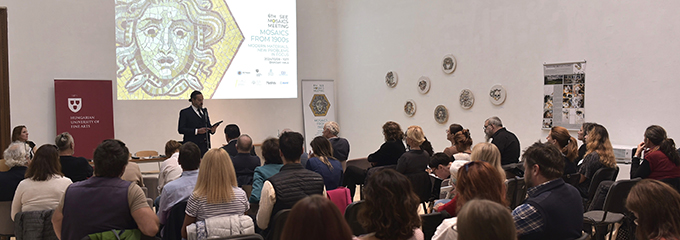
This event, which brought together over 50 colleagues from 15 European countries, provided an excellent opportunity to exchange knowledge, experiences, and best practices in the preservation of cultural heritage. In addition to the countries that were previously represented within the SEE Mosaics activities (Serbia, Slovenia, Croatia, Bosnia and Herzegovina, North Macedonia, Bulgaria, Romania, Italy, France, Austria and Hungary), this year's theme also attracted participants from Belgium, the Czech Republic, Georgia and Ukraine. As in previous SEE Mosaics events, the number and diversity of experts was made possible through the financial support of the Central European Initiative.
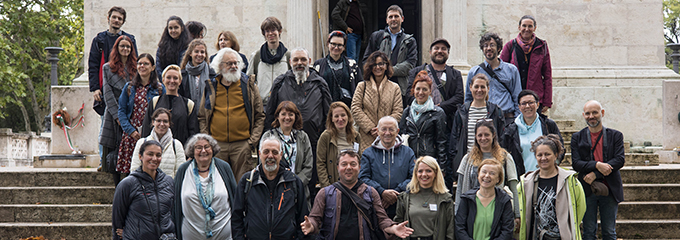
The meeting was opened by the Vice-Rector and Secretary of the University of Fine Arts in Budapest, and the participants were also addressed by the Ambassador of Bulgaria, who opened the accompanying poster exhibition “Bulgaria and Mosaics”. Over the three working days, 23 oral presentations and 12 poster presentations were presented.
To view workshop programme, click here.
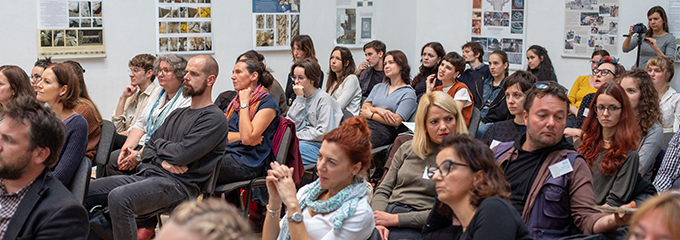
Through the presentations of the participants and the discussion, several key issues specific to the preservation of modern mosaics were highlighted:
- Technical and technological issues – problems with the cement base on mosaics, the use of synthetic materials in the conservation process, difficulties in providing appropriate material for the reintegration of lacunae (original glass paste and original natural stone).
- Ethical approach to the restoration of modern mosaics – issues of the reintegration of lacunae on mosaics that are utilitarian, the preservation of aesthetic and artistic values in relation to historical and documentary ones.
- The vulnerability of mosaics from the second half of the 20th century that do not legal protection status – socialist realist mosaics and issues of preserving mosaics from the “difficult” past, modern, avant-garde and postmodern mosaics in privatized public spaces, possibilities of preservation through raising awareness of their significance and values.
The above issues were touched upon for the first time at this meeting, and there is interest in exploring them further through future activities. This primarily relates to data collection and the compilation of mosaic registers, activities that have already been launched in Bulgaria, the Czech Republic and Slovenia, which could be linked and geographically expanded through international projects.
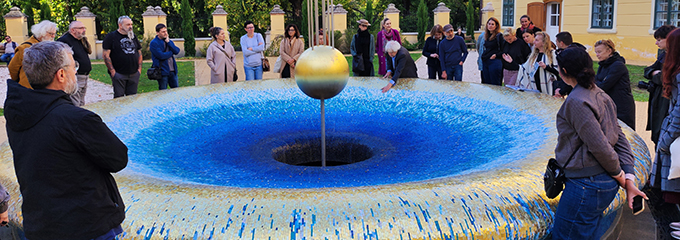
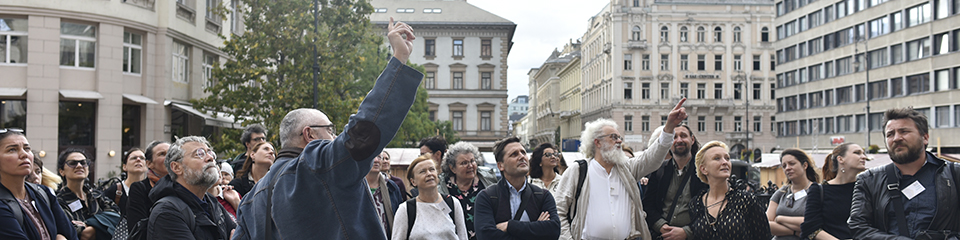
The working part of the meeting was accompanied by visits to representative examples of modern mosaics in Budapest that decorate the premises of the Franz Liszt Academy of Music, the Szécsány and Gerlet thermal baths, St. Stephen's Basilica, as well as the chapels at the Jewish Cemetery and the National Cemetery. The last day was set aside for a study visit that included a visit to monuments of post-war modernism - mosaics in the cultural centers of the former thermal power plant Inota and Stalinváros (today's Dunajuváros), as well as the Archbishop's Palace with a library in the city of Kalocsa.
Supported by:

Connect:

